TPAC 2026, Morgan's experience
Morgan Murrah
I thought I would share a sample of experiences from TPAC, the annual W3C conference where the web’s standards are shaped by all kind of interesting people such as browser makers, designers, accessibility advocates, and people working on the everyday realities of the web.
I attended this year despite being between-work, and had a blast, and contributed!
Full Day with Sustainable Web IG - Monday
Full Day with Sustainable Web IG - Tuesday
Breakout Groups - Web Sustainability Guidelines in the Wild - Wednesday
That is a lot of sustainability!
A number of experiences colored the whole thing for me:
-
Late registration, waived fee as an IE
First, there was the practical reality of registering late. I was lucky enough to participate as an Invited Expert, which meant the fee was waived rather than a barrier.
For me, that waiver was the first signal that TPAC is not just a conference in the usual sense. It is a community event where invited participants come together to improve the platform we all depend on, and where participation is treated as a contribution to a public good rather than a purchase of a professional perk.
-
Participation in days long standards discussions. Incredibly smart people. Learning and applying knowledge.
The most memorable part of TPAC was the sheer density of the conversations. The conference brings together people who do not just know web standards in theory, but who live inside browser engines, web performance, sustinability, accessibility tools, authoring practices, and the real-world constraints of shipping software to millions of users. The discussions were long, technical, and often nuanced in exactly the way web standards work should be.
I think I asked some good questions, and a few not so relevant ones, mostly I just felt included and welcomed!
-
Breakout groups: Mind the Gaps
Another highlight
The Mind the Gaps discussions particularly resonated because Ive done so many surveys! Whats going on behind them?
Campaign Toolkit
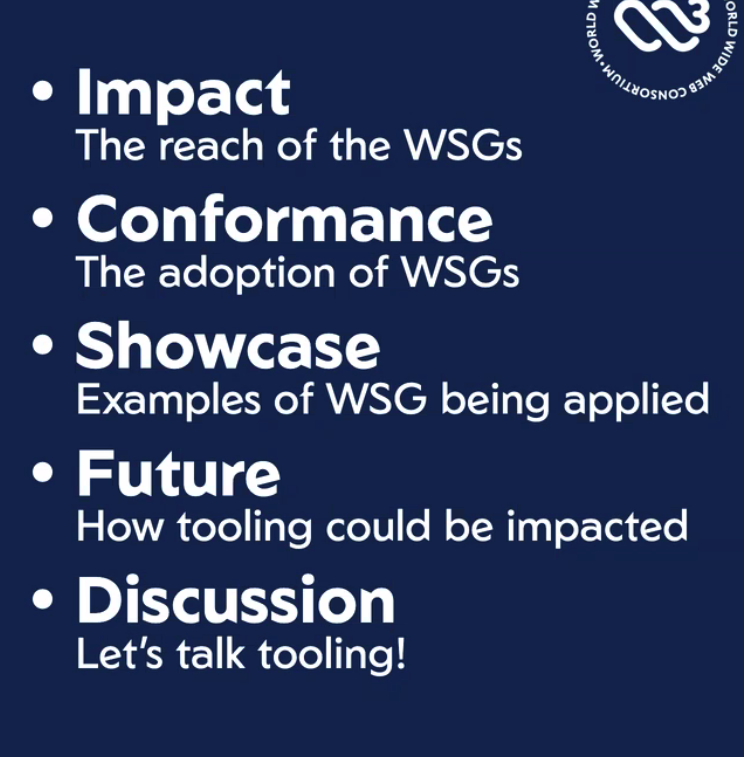
The W3C’s Web Standards Group work, and the broader ecosystem around it, reminded me that standards do not exist in a vacuum. They are shaped in public, tested in browsers, refined by real implementations, and adapted to the lived realities of people building and using the web. I saw this especially in the ways groups discussed how proposed changes would play out in the Web Sustainability Guidelines in the Wild.
Ecograder was demonstrated in its new version under development.
I participated a bunch in the discussion!
- Conclusion: To come…